
Category Archives: baseball

Ethnic Baseball in Hawai‘i, 1920s–40s

From: Wally Yonamine: The Man Who Changed Japanese Baseball, by Robert K. Fitts (U. Nebraska Press, 2008), pp. 48-49:

The Athletics, previously known as the Asahi, were the elite Japanese American team in the Hawaiian Islands. Founded in 1905 as a team for Japanese thirteen- and fourteen-year-olds, the Asahi soon dominated the AJA (Americans of Japanese Ancestry) Oahu Junior League. Finally, in 1920, league organizers decided that the team was too strong and moved the youths into the adult AJA Honolulu Baseball League. Three years later, the Asahi won the championship.

In 1924 the multiethnic Hawaii Baseball League was formed with six teams. Original members included the Portuguese Braves, the All-Chinese, the All-Hawaiians, the All-Filipinos, the Elks (made up of haoles) and the Asahi. With no age restrictions, Asahi recruited the best players from the AJA leagues throughout the islands. The Japanese team fared well, winning championships in 1925, ’26, ’29, ’30, and ’38. Japanese Hawaiians followed the Asahi’s triumphs closely, and Hawaii’s two Japanese-language newspapers, the Hawaii Times and Hawaii Hochi, covered the games and players in detail. The ballpark also became a meeting place for the community as thousands of ethnic Japanese came to Honolulu Stadium for each game.

With the outbreak of World War II, Japanese Hawaiians strove to show their loyalty to the United States. Many, including Asahi owner Dr. Katsumi Kometani, volunteered for the armed forces. With Kometani’s permission, the team downplayed its Japanese affiliation. John A. Burns, the future governor of Hawaii, ran the team in Kometani’s absence, while future Honolulu mayor Neal Blaisdell managed. The two haoles changed the team’s name to the Athletics and added several non-Japanese to the roster. The club did well and captured the 1942 championship. Kometani returned in 1945, reestablished the team’s all-Japanese American roster, and appointed Allen Nagata as manager. The team, however, remained the Athletics until it retook the Asahi name after the 1949 season.

Okinawans, like half-Okinawan Yonamine, were welcome to play on the AJA teams, but Wally and his wife-to-be got a lot of grief from both sides before they wed (in 1952) for not marrying within their respective Okinawan and Japanese communities.

According to this timeline, Wally went by his given name Kaname (要 ‘pivot, linchpin’) until 1943.
7 Comments

Filed under baseball, Hawai'i, Japan, U.S., war

Yomiuri Giant Nagashima as Manager, 1970s

From: Wally Yonamine: The Man Who Changed Japanese Baseball, by Robert K. Fitts (U. Nebraska Press, 2008), pp. 302-303:

As a manager, Nagashima could inspire his players. John Sipin, a former San Diego Padre who played with the Giants from 1978 to 1980 after five years with the Taiyo Whales, recalls, “Nagashima was a great leader. He was a legend and had extremely high energy. Unlike most managers, he would not go into the dugout and sit down. He was always on the field, hitting fly balls or ground balls.” Nagashima especially liked aggressive players who showed “fighting spirit” and rewarded them with compliments and playing time. His enthusiasm was infectious and most of his players trained and played hard for him.

Nagashima’s ability as a strategist, however, did not match his enthusiasm. He rarely played percentage baseball. Instead, he relied on a bizarre combination of traditional conservative Japanese baseball tactics and irrational hunches. After a lead-off hitter reached base, Nagashima routinely used the second batter to bunt the runner over, even when the Giants trailed by large margins. He rarely employed pinch runners, even when a slow catcher representing the tying run stood on second in the late innings. He bunched his like-handed hitters together in the lineup, instead of interspersing lefties with righties. Most importantly, he did not stick to a steady pitching rotation. He often started pitchers who were throwing well on short rest and continually used starters in relief. Nagashima was also intolerant of pitching mistakes and routinely pulled pitchers at the first sign of trouble.

He seems to have done better the second time around, during the 1990s.

1 Comment

Filed under baseball, Japan

American Influence on Japanese Baseball, 1953

From: Wally Yonamine: The Man Who Changed Japanese Baseball, by Robert K. Fitts (U. Nebraska Press, 2008), pp. 126, 140-141:

[Before 1953], a typical Japanese catcher would receive the ball from the pitcher, take two steps forward, crank his arm back, and throw it back to the mound. In the midst of that routine, [American Nisei Wally] Yonamine would sometimes steal second base, sliding in safely just as the pitcher caught the ball. [Nisei catcher Jyun] Hirota brought American receiving to Japan. He had a strong arm and used to return the ball to the pitcher while still in his crouch. The fans loved it as much as opposing base runners feared it. Soon, Japanese catchers began mimicking Hirota and their mechanics changed. The average number of stolen base attempts in the Central League dropped from nearly 3.0 per game in 1952 and 1953 to 2.6 per game after Hirota’s second season in Japan….

One of the most enduring questions of international baseball is how the quality of the Japanese leagues compares to the U.S. Major and Minor Leagues. Many baseball experts consider the Japanese leagues at the present time to be “4A”—that is, better than Triple A but not equal to the Majors. In 1953 the gap was even broader. The Giants were undoubtedly Japan’s best team, but they were unable to match Pacific Coast League teams, even during spring training. The game results suggest that the club was probably equivalent to class A competition. Some of the Giants, however, could have played at a higher level. Takehiko Bessho particularly impressed PCL managers; San Diego reportedly tried to buy his contract from Yomiuri. Lefty O’Doul also noted that Yonamine could move into the PCL if he was interested in returning to the United States.

Despite their poor record, the trip to Santa Maria was a resounding success. “We certainly learned a lot during our spring training,” proclaimed Harada, “and I can truthfully say that this is an entirely different ball club now. The Major League managers especially, briefed us thoroughly on how to play the national pastime properly. The many so-called inside hints that they offered us went a long way toward improving all of our players.” The managers helped the Giants with all aspects of their game. Kawakami learned to hit with more power by cocking his wrists. Chiba worked on fielding fundamentals and getting his body in front of the ball. “He doesn’t make those one-handed catches he used to make,” Harada commented approvingly. Mizuhara adopted Leo Durocher’s style of leaving the dugout and managing from the third base box. He also learned how to direct base runners and use signs like the American managers.

Perhaps most importantly, the Giants experienced the aggressiveness of American baseball firsthand. Early in the trip, Shigeru Chiba, attempting to turn a double play Japanese-style by standing on second base, was taken out with a hard slide and was spiked. He quickly learned how to move off the bag and avoid a slide while making a double play. The Japanese realized that Yonamine was not particularly rough or dirty, but just played hard-nosed American baseball. Some of the Giants began to adopt a more aggressive style and learned to slide hard with their spikes up.

2 Comments

Filed under baseball, Japan, U.S.

Japanese vs. American Baseball Practice

From: Wally Yonamine: The Man Who Changed Japanese Baseball, by Robert K. Fitts (U. Nebraska Press, 2008), p. 272:

Many Americans state that the Japanese practice too much. “I believe that the Japanese put more emphasis on practice than actually playing the game,” said Gene Martin, who later played for Yonamine. Leron Lee, who played for the Orions during the 1980s, adds, “To show their fighting spirit, the Japanese would focus on how hard they could practice and how long they could practice…. So when they would get into the ball game, they couldn’t really perform up to their abilities.”

Yonamine agrees that many Japanese managers at that time conducted drills that accomplished little. He especially disliked the thousand ground ball drill, pointing out that as players tired they abandoned their fundamentals. At best, it led the players off track. At worst, it led to bad habits that affected their play.

Wally, however, argues that Japanese players then, and now, need to practice more than Major Leaguers. In the United States, most players learn baseball basics in high school, college, or at the latest in the instructional league—the first rung of the Minor League ladder. They then fine-tune their skills as they ascend through the extensive Minor League system. During this time, the young players practice hard so that when they become Major Leaguers, proper technique is automatic. Most Japanese, on the other hand, have not been taught proper fundamentals in high school and college. They enter the professional league as raw players with much to learn. There is no equivalent of the American instructional league in Japan, and each club has only one minor league squad. Young Japanese players therefore rarely get enough drill before they are promoted to the main team. As a result, Japanese managers need to constantly instruct their players and improve their skills even after they become starters on the parent club.

I bought an extra copy of this book for my father, who’s the same age as Wally Yonamine, arrived in Japan about the same time, and became a big fan of Wally. During a decade in Hiroshima, he also became a fan of the hapless Hiroshima Carp, whose former pitcher Hiroki Kuroda just pitched a crucial win for the Dodgers in the current NLCS. Kuroda seems to have brought Japanese-style baseball with him to the U.S., according to a nice LA Times profile of him this past summer.

1 Comment

Filed under baseball, Japan, U.S.

Baseball’s 1990s: Steroids and Strike Zones

The latest issue of NINE: A Journal of Baseball and Culture (Project MUSE subscription required) contains an article by Benjamin G. Rader and Kenneth J. Winkle, reexamining the reasons for Baseball’s Great Hitting Barrage of the 1990s (and Beyond).

In an article published in NINE in 2002, we examined what we called “Baseball’s Great Hitting Barrage of the 1990s.” In addition to offering statistical support for the claim that there was an unusual amount of offensive productivity in the 1994 through 1999 seasons, we also considered explanations for why the hitting revolution had occurred. With regard to the latter, we questioned some of the popular theories for the offensive outburst—namely the “juiced-ball” hypothesis, the belief that ballparks were cozier in the late 1990s than they had been earlier, and the role of league expansion in diluting the quality of pitching. But at the same time we lent support to the arguments that lighter bats, physically stronger hitters, and a new style of hitting (with the assistance of a smaller de facto strike zone) contributed significantly to the great hitting barrage of the late 1990s.

Now is an especially opportune time to reexamine and update our earlier findings. Not only do we presently enjoy the benefit of a longer historical perspective on the 1990s, but we are also able to extend our analysis from the 2000 through the 2007 seasons. Furthermore, recent disclosures of the widespread use of performance-enhancing drugs by the players and Major League Baseball’s implementation of a drug-testing program in 2003 make it possible to employ statistics to better speculate about the effects of drugs on the great offensive barrage. Equally important to a reconsideration of the recent offensive outburst was the decision of Major League Baseball (beginning in 2001) to enlarge the de facto strike zone, determined by the umpires, and impose a more uniform strike zone on the umpires.

We reach three major conclusions. First, the great hitting barrage peaked during the 1999 and 2000 seasons. While remaining far above the two-divisional era in offensive productivity, the 2001 through 2007 seasons fell below the peak achieved in 1999 and 2000. Based on batting averages, runs per game, home runs per game, and on-base percentage plus slugging percentage, we posit three eras of offense in recent baseball history: (1) the two-divisional era of low productivity (1969–1993), (2) the great offensive barrage (1994–2000 seasons), and (3) the new equilibrium (2001–2007 seasons). Second, while it is impossible to offer quantifiably direct evidence of the relationship between drug use and the offensive explosion, we conclude that player use of performance-enhancing drugs did contribute to the hitting barrage. As the threat of exposure and then drug testing increased, some measures of offensive productivity began to decline, though not approaching the depths of the two-divisional era. Third, it is possible to offer more quantifiably direct evidence of the relationship between the strike zone and the offensive explosion than it is the relationship between drugs and offense. We conclude that the size of the de facto strike zone was an equal, and perhaps even more important, variable in explaining the hitting revolution as well as its modest decline after the 2000 season. When Major League Baseball decided to try to impose a more uniform strike zone on the umpires in the 2001 season, seasonal batting averages and runs per game (but not home runs) fell, though not back to earlier levels.

The same issue also contains a poem by Mary Herbert that Language Hat is sure to appreciate, Only Peggy Lee Could Sing of My Mets Misery.

Leave a comment

Filed under baseball, U.S.

The Jackie Robinson of 1905?

Ten years ago in Harvard Magazine, Karl Lindholm briefly profiled Harvard graduate William Clarence Matthews, who some people at the time thought might be capable of breaking the color barrier in professional baseball by playing with the Boston Nationals.

Born in Selma, Alabama, and trained at Tuskegee Institute from 1893 to 1897, Matthews was a promising student and outstanding athlete who was sent north for further education, first to Phillips Andover and then to Harvard. From 1901 to 1905, he played shortstop on perhaps the best college team in the country (75 wins, 18 losses in his four years) at a time when baseball enjoyed singular appeal in the United States. It was not uncommon for players to walk off a college campus onto a major-league diamond: Christy Matthewson left Bucknell for John McGraw’s Giants, and two of Matthews’s teammates, Walter Clarkson and “Harvard Eddie” Grant, went on to play in the big leagues….

Unlike many other black players, he had options off the diamond. He had taken courses at Harvard Law School as a senior; now he earned an LL.B. at Boston University while working as an athletic instructor at Boston high schools. He passed the bar in 1908 and embarked on a legal and political career; in 1913, with the help of Booker T. Washington, he was appointed special assistant to the U.S. district attorney in Boston. From 1920 to 1923, he served as legal counsel to the black separatist Marcus Garvey.

Even while working with Garvey, he remained involved in Republican politics, and he played a major role in the 1924 presidential campaign. When Calvin Coolidge was elected with the help of a million black votes, Matthews was rewarded with a post in the Justice Department–but a list of “demands” for the “recognition of colored Republicans” that he presented to party leaders was ignored. Whatever else he might have accomplished was thwarted when he died of a perforated ulcer at 51. His death was reported in all the major East Coast newspapers: the Boston Globe called him “one of the most prominent Negro members of the bar in America.” The black press ran front-page headlines.

Matthews said in 1905, “A Negro is just as good as a white man and has just as much right to play ball.”

Now, ten years later, Karl Lindholm has published a fuller analysis of the public speculation at the time in the latest issue of NINE: A Journal of Baseball History and Culture (Project MUSE subscription required). His article title, Rumors and Facts: William Clarence Matthews’s 1905 Challenge to Major League Baseball’s Color Barrier, indicates that the newspapers of that era, in particular the Boston Traveler, were often no more reliable than those of our day.

Rumors sometimes have a basis in fact, and sometimes rumors are pure fiction, made up, irresponsible, serving commercial, political, or personal ends. In 1905, one of baseball’s most compelling rumors involved the imminent entry into the major leagues of William Clarence Matthews, “Harvard’s famous colored shortstop.” This rumor, reported in the Boston Traveler in July 1905, was repeated in Sol White’s History of Colored Baseball (1907) and passed on to contemporary audiences by Robert Peterson in his seminal Only the Ball was White (1970).

There are inevitable questions about the rumor’s veracity. Is it possible that forty years before Jackie Robinson signed a contract with Brooklyn, someone in organized baseball was seriously considering adding a black man to a major league roster?

This essay addresses that question by examining the major players—the Boston Nationals’ player-manager Fred Tenney in particular—as well as the primary documents associated with the rumor of Matthews’s breakthrough, demonstrating the reasons Matthews might plausibly be considered for this role, while also raising the possibility that the Traveler conjured a patently false story in Boston’s overheated journalistic environment during the first decade of the twentieth century.

Leave a comment

Filed under baseball, publishing, U.S.

Ichiro’s “English for Special Purposes”

On top of his fine analytical and motor skills on the baseball field, Ichiro seems to possess the motivational skills necessary to manage an American baseball team, or so reports Jeff Passan of Yahoo! Sports, who credits Ichiro’s motivational speeches for the American League’s string of wins in recent All-Star Games. Look for him to manage, say, the Chicago White Sox after he retires from playing.

“It’s why we win,” David Ortiz said.

He pointed to Ichiro Suzuki, the Seattle Mariners’ wisp of an outfielder, a man who still uses a translator to do interviews with English-speaking reporters – and happens to be baseball’s amalgam of Anthony Robbins and George Carlin. Every year, after the AL manager addresses his team, Ichiro bursts from his locker, a bundle of kinetic energy, and proceeds, in English, to disparage the National League with an H-bomb of F-bombs, stunning first-timers who had no idea Ichiro speaks the queen’s language fluently and making returnees happy that they had played well enough to see the pep talk again.

The tradition began in 2001, Ichiro’s first All-Star appearance, and the AL hasn’t lost a game since. Coincidence?

Um. No.

“I know how important it is to the game,” Ichiro said. “I’m more concentrated at that moment than I am in the game.”

A wide grin spread across his face. Ichiro’s secret had been exposed, so, hey, why not have fun with it?

He crafts his public portrayal similar to the image he projects on the field: a technician, a warrior, a Ph.D. in stoicism. In reality, Ichiro’s All-Star teammates love him for his wicked sense of humor and sly deceit, shown with a vocabulary far more expansive than he leads on.

All the first baseman around the AL know Ichiro speaks English, singles accounting for 1,393 of his 1,711 hits since joining Seattle in 2001. Generally, the conversation doesn’t move much past pleasantries, which makes the speech all the more shocking.

via Daniel Drezner

Leave a comment

Filed under baseball, Japan, language, U.S.

Rakes Muck Best From the Top

Chicago Tribune columnist John Kass manages to tie together three prominent scandals and special investigations.

I love baseball, and I loathe Bonds. But baseball isn’t the Oval Office and Democratic excuses for being sexually satisfied by an intern while you’re on the phone with a congressman talking about sending American troops to the Balkans. Baseball isn’t a list of names of foreign operatives that can be linked to a CIA officer outed only because the Republican Bush administration didn’t like her husband’s politics. Baseball isn’t sacred. It’s a professional sport. Bookies make a living on it.

This is what happens when we abandon the principle that no one is above the law, and exchange it for the warm comforts of partisanship. It’s something many Democrats did years ago for the Clintons. They prattled on that lying under oath was OK as long as it involved sex. It wasn’t. It was lying under oath.

It’s something many Republicans did recently for the Bush administration, saying it was OK for “Scooter” Libby to lie under oath because he wasn’t the original leaker in the Valerie Plame affair. It wasn’t OK. It was lying under oath.

So, by rights, and by their own words, or by their slick avoidance of the issue, every Democratic and Republican candidate for president should join a Save Barry Bonds news conference, a bipartisan gathering, on the steps of the U.S. Supreme Court, flanked by their eager media jesters….

Democratic and Republican candidates should stand at the Barry Bonds rally in front of a banner with a simple slogan:

“Barry Bonds was only lying about baseball.”

Okay, I see the parallels, but I would add another set: Why single out the President, among all the philanderers in public office? Why single out the Vice President’s office, among all the leakers in public office? Why single out Barry Bonds, among all the steroid users in major league baseball? Pentru că peştele se împute de la cap and rakes muck best from the top, perhaps?

Leave a comment

Filed under baseball, U.S.

China Diary, 1988: The Inscrutable West

In 1987–88, the Far Outliers, with their two-year-old daughter in tow, spent a year teaching English at a new community college in Zhongshan City, Guangdong Province, China. The following is one of a series of articles I wrote in 1988. I sent them to a Honolulu newspaper, but they were not interested. So now I offer them as a retrospective on coastal China twenty years before hosting its first Olympics. At the same time, I am scanning in a lot of our old China photos and uploading them to my Flickr account or to my WordPress blog to illustrate this series.

One of my Chinese students wrote:

“Play baseball must have two group and each one have nine person. They stand in the place and play the ball. One group is throw the ball to the other group. The other group must approach the ball and fielding the ball. Before the ball coming you must watch the ball because you must keep it.”

I corrected the grammar but didn’t worry about the ideas. It’s hard to explain baseball in ten minutes, even when you have a blackboard to work with.

You don’t have to understand baseball—or cricket or rugby or Aussie rules or American football—to master basic English. But when you teach English abroad, someone is bound to ask you what it means to strike out, throw someone a curve, or be out in left field.

I don’t feel too confident myself explaining cricket phrases like “sticky wicket,” and I’m even foggier about what the Hong Kong newscaster means when he says “Pakistan are 396 for seven in the third day of play” in a Commonwealth cricket tournament.

To our students in Zhongshan, the eating habits of English-speaking peoples are at least as peculiar as their sports—and more essential to understand, especially when many will go to work in the local visitor industry.

A few examples from our role-play in class illustrate:

Teacher: “I’ll take your chicken and pineapple salad.”
Student: “What kind of dressing would you like on it? We have oil, vinegar, French, Italian, Russian, and British.”

Eating raw vegetables tossed with dressing is a foreign notion in China. Lettuce, called “raw vegetable” (sheng cai), is abundant in the markets. But our students asked, “Have you ever eaten it raw?” We never did there.

Teacher: “I’ll take the French onion soup, the roast beef medium rare, and apple pie for dessert.”
Student: “And what kind of sandwich would you like?”

Our students figure a complete meal should include at least one item under each major section of the menu, just as a complete Cantonese meal might include a soup, a poultry dish, a seafood dish, a meat dish, and a vegetable dish. And they don’t usually measure the size of a meal by the number of helpings eaten. They count the number of dishes served.

Teacher: “I’d like a beverage with my meal. What do you have?”
Student: “Tea, Coke, Sprite, cognac, and brandy.”

A common sight in restaurants in Zhongshan, even at breakfast, is a bottle of liquor in the middle of the table. Having “wine” (usually translated jiu, meaning any kind of alcohol) with a meal is not a foreign idea, but the fine distinctions among the types of alcohol usually drunk before, during, or after a meal in the West require some explanation.

Typical American classroom culture is also hard for students in China to understand.

After hearing in a listening comprehension talk that young Alfred Hitchcock went to strict schools, one student asked, “What other kind is there?”

Chinese students are usually highly motivated and don’t expect the kind of song-and-dance routines that American teachers employ to try to keep their barely interested students from being disruptive or falling asleep. But Chinese students do doze off during long lectures, and most of their classes are long lectures.

In addition to passively listening, the students memorize and recite, read and translate. It takes a lot of work to get most of them to absorb and present information without memorizing it, to answer questions in their own words, or to participate in a seminar-type class.

As one Chinese essayist in China Daily observed, “stuffing students’ heads full of knowledge is by no means the best way” to educate them. The writer, obviously a radical revisionist, advocated less reliance on lectures and more reliance on seminars and directed research.

Still, the examination system in China has for centuries tested memorized knowledge, and classroom initiative has for centuries come from one source—the teacher—even if heads do nod from time to time.

UPDATE: Basketball has certainly become more scrutable in China in over the past two decades (via Language Hat).

1 Comment

Filed under anglosphere, baseball, China, U.S.

Quirky Minor League Team Names

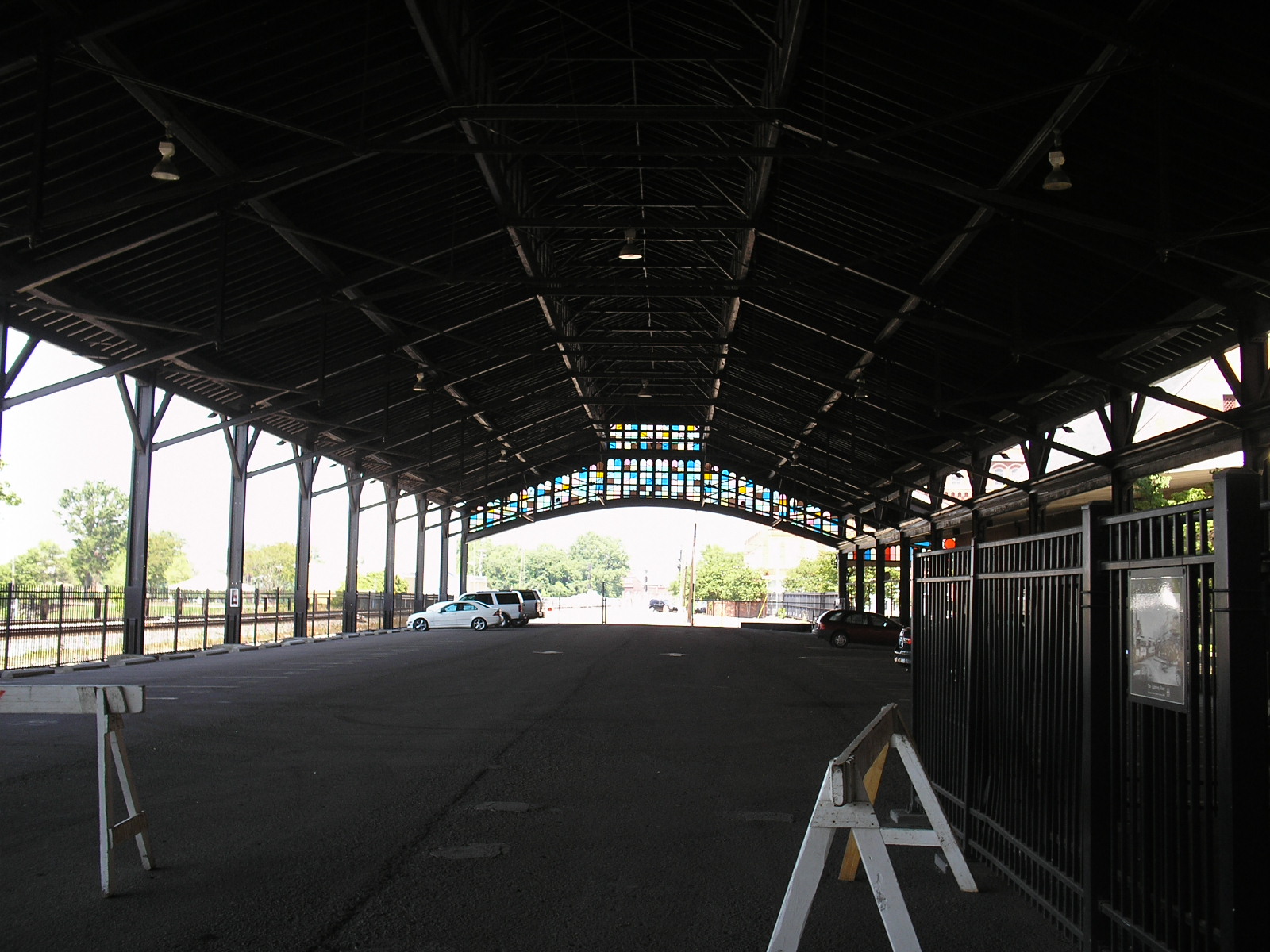
Montgomery, Alabama, Visitor Center/Union StationIn the Montgomery, Alabama, visitor center that used to serve as the city’s Union Station, there’s a cleverly named restaurant called Lek’s Railroad Thai. It was there that I discovered that the city’s minor league (AA) baseball team is called the Biscuits (2006 Southern League Champions). What a nice bit of self-mocking regional pride! Of course, we were headed that night for the home of the Columbus, Georgia, Catfish, a name that inspires such headlines as RiverDogs fry Catfish and Braves filet Catfish. And the next day, we were headed toward the hometown of the Savannah, Georgia, Sand Gnats.

A lot of minor league team names are not only boring, but predictable. Guess whose farm teams the following are: the Richmond Braves, Iowa Cubs, Sarasota Reds, Binghamton Mets, Reading Phillies, San Jose Giants, Springfield Cardinals, Potomac Nationals, Dunedin Blue Jays, Scranton/Wilkes-Barre Yankees, Omaha Royals, Kinston Indians, and Pawtucket Red Sox.

Other team affiliations are not dead giveaways, but pretty easy derivatives of the parent team name: the Tucson Sidewinders, Delmarva Shorebirds, Aberdeen Ironbirds, Rochester Red Wings, San Antonio Missions, Memphis Redbirds, Tacoma Rainiers, and Harrisburg Senators.

But my favorite team names are those with strong local flavor, and little reflection of their parent organizations: the Augusta GreenJackets (Giants), Cedar Rapids Kernels (Angels), Chattanooga Lookouts (Reds), Lansing Lugnuts (Blue Jays), Louisville Bats (Reds), Hickory Crawdads (Pirates), Great Lakes Loons (Dodgers), Rancho Cucamonga Quakes (Angels), Albuquerque Isotopes (Marlins), Lowell Spinners (Red Sox), Tennessee Smokies (Cubs), Mahoning Valley Scrappers (Indians), Durham Bulls (Devil Rays), Norfolk Tides (Orioles), Brevard County Manatees (Brewers), and–my favorite–Modesto Nuts (Rockies).

Future team names I’d like to see are the Orange County Fruits, Gilroy Garlics, Salinas Lechuga, Monterey Squid, Madison Brats, Waukegan Wieners, Ozark Nightcrawlers, Bismarck Sugar Beets, Rapid City Rutabagas, and Smithfield (Virginia) Hams.

UPDATE: Isotopes Park in Albuquerque hosted the Triple-A All-Star Game on 11 July 2007.

1 Comment

Filed under baseball, travel, U.S.